
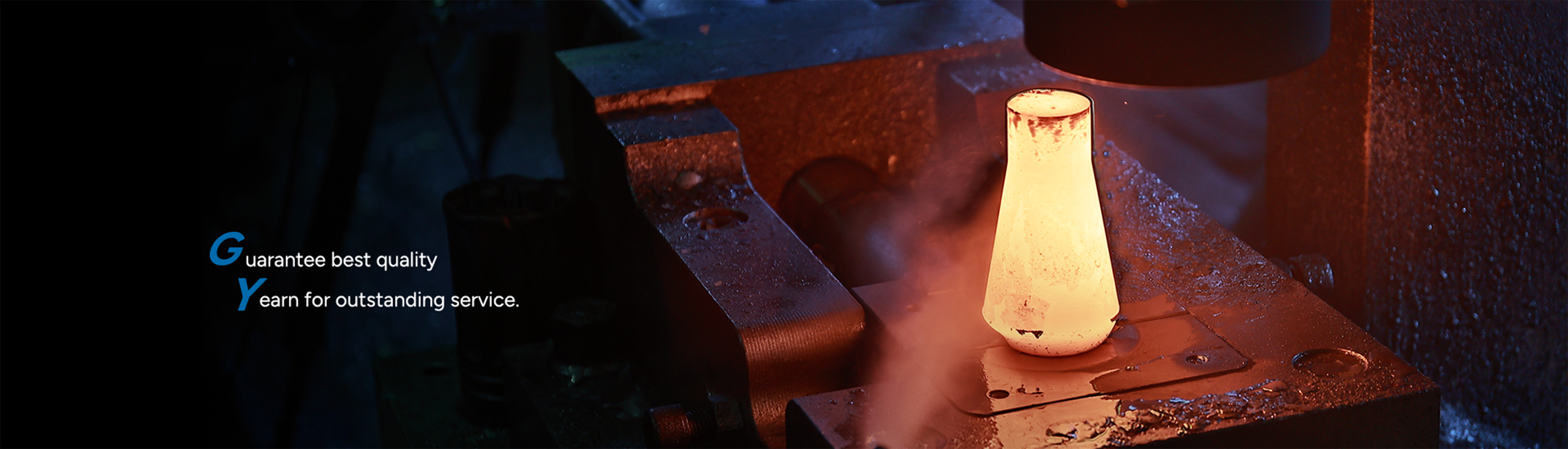
Forging vs. Casting: More Than Just a Process—It’s a Matter of Performance and Reliability
Forging vs. Casting: More Than Just a Process—It’s a Matter of Performance and Reliability
In metal component manufacturing, forging and casting are frequently compared. While both processes transform metal into parts, the fundamental difference in their forming methods directly influences the material's internal structure and final performance. This is why forging is often the preferred choice for applications requiring superior strength and safety.
Simply put, casting forms parts by melting metal and pouring it into a mold. In contrast, forging shapes metal by applying pressure while it remains in a solid but plastic state (typically at elevated temperatures). This distinction is the key factor creating the significant gap in strength and service life between the two processes.
Differences in Internal Material Structure
During the cooling and solidification process of casting, defects such as gas porosity, shrinkage cavities, and chemical segregation can occur due to uneven cooling or shrinkage. These internal flaws are often invisible to the naked eye but can become crack initiation sites under long-term loads or cyclic stresses, compromising component durability.
Conversely, forging applies immense pressure to the metal, compacting the material. This process aligns the grain structure with the component’s shape, creating continuous grain flow. This refined structure increases material density, significantly mitigates internal defects, and enhances overall strength and reliability.
What Types of Products Are Suitable for Casting?
The primary advantage of casting is high design freedom. Components with complex geometries, intricate details, or internal cavities are often easier to produce through casting.
In high-volume production, casting benefits from automation, leading to lower unit costs. Consequently, it is widely used for housings, cosmetic parts, and structural components with moderate mechanical requirements. However, when products are subjected to high loads, impacts, or fatigue, cast components often require thicker sections to compensate for lower material strength, resulting in increased weight and material consumption.
Why Are High-Performance Components Often Forged?
The most significant advantage of forging is its consistent mechanical properties and superior structural integrity. Given the same material and geometry, forged parts typically demonstrate higher load-bearing capacity, tensile strength, and compressive strength compared to castings. Field experience and technical data indicate that forged components can generally withstand 20–30% higher maximum loads than their cast counterparts.
Additionally, due to the absence of porosity and the presence of uniform grain flow, forged components offer superior fatigue resistance and a longer service life under cyclic loading. This is why forging is the standard for automotive chassis, suspension systems, drivetrain components, and aerospace structural parts.
Another often-overlooked benefit is design flexibility regarding weight. Because the material itself is stronger, engineers can achieve required safety factors using thinner cross-sections. This enables weight reduction and improved overall performance—a critical advantage in lightweight design applications.
How to Choose the Right Manufacturing Process
In practice, there is no universal rule dictating whether forging or casting must be used. The decision depends on the component’s functional requirements and design objectives.
When strength, fatigue life, and long-term reliability are critical—especially for high-stress or safety-critical components—forging is generally the superior choice. If design complexity, production efficiency, and cost control are the primary concerns while mechanical demands are moderate, casting offers greater flexibility.
Conclusion
From a material performance perspective, forging clearly excels in strength, toughness, and durability, making it the preferred process for high-performance and safety-critical applications. On the other hand, casting delivers excellent value for complex geometries and cost efficiency.
In product development, selecting the appropriate process should begin with an evaluation of the operating environment and safety requirements, followed by cost and production volume considerations. This approach ensures the optimal balance between performance and economic efficiency.
